Subscribe: pinterest
Showing posts with label Jewish Day School. Show all posts

Wednesday, August 21, 2013

And It Was Good: A Report on the First Day of School

It has been a good day.
 
We began with a bright, sunny day as students slowly arrived for the first day of classes. There was  excitement in the air, and it wasn’t just from the coffee and donuts that wonderful parent volunteers from the Kehillat Schechter Committee were passing out. Parents were taking pictures, old friends were greeting each other, and new friendships were forging.  Even our community partners, the Pepper Pike Police Department, were smiling when they stopped by to see how our first day of school was going.
 
This was good.
 
The excitement continued to build as we entered the Merkaz to welcome our kindergarten students. Our kindergarteners joined the day school community, in front of their parents and the 1-8 grade student body. I had the privilege and honor of reciting my first bracha, the Shehechiyanu, as Head of School and, in this case, my first blessing as a Schechter parent. Together with my fellow kindergarten parents (my oldest daughter is in this class), we recited Shehechiyanu as we watched our sons and daughters become kindergartners and start the their formal school years.
 
This, too, was good.
 
My colleague and friend, Rabbi David Kosak of Congregation Shaarey Tikvah, joined us to offer the Priestly Blessing and to share the story of a young Hillel and his thirst for knowledge. We hope that all of our students model Hillel’s desire to learn and that they grow to be like Ephraim, Manasseh, Sarah, Rebecca, Rachel and Leah as the blessing recalls.
 
This was good as well.
 
Our teachers surprised the students by donning wigs and grabbing pom-poms to sing “Gross Schechter is Going to Be Fun” to the tune of Cyndi Lauper’s hit. This touch of silliness and spirit brought smiles (and perhaps some laughter, as well) to the students faces. It was just a small part of the enthusiasm that staff has brought in the days leading up to school.
 
And this was good.
 
After students dispersed to their classes, I walked through the school and was greeted by “Good morning, Dr. Yares” and “Boker Tov, Dr. Yares.” I am looking forward to longer visits with each of our grade levels in the coming days.
 
This was also good.
 
With the arrival of the pre-schoolers next week, we will start the school year with an enrollment of 269, an increase of 4% over last year. And another great year begins.
 
There is bracha that we say upon hearing good news, ha-tov v’ha-maiteev. Today truly has been a day filled with good news. I began my day with Shehechiyanu, thanking God for allowing us to reach this moment. I end my day reciting ha-tov v’ha-maiteev, thanking God for the goodness that has graced our lives today and with hope for more opportunities to say this bracha in the future.

Friday, May 10, 2013

A Staircase to...?


Tuesday started off with an unusual request. On my way to run one of the high school’s alternative minyanim, I was stopped by a group of seniors on the staircase. “Dr. Yares,” they asked, “Can we have our grade level minyan today?”

Now, these same students have been involved in the tefillah conversations that had happened earlier in the year with the Student Government and later with the Va’ad Tefillah. Naturally, I was a bit surprised to hear them request to not have the alternative minyanim that they had helped bring about. However, when they shared their reason for their request, then I got it.

What was the reason? “It’s our last tefillah together as a grade.”

This was a profound statement from these students. While the alternative minyanim are designed to help provide tools to draw us closer to God through tefillah, the students were reflecting on another purpose of tefillah, drawing us closer to each other.

Jewish prayer can happen as an individual, but when we gather as a group of ten or more, as a minyan, we gain the ability to say special tefillot. More importantly, perhaps, is that tefillah in a minyan includes portions that are said aloud and this format emphasizes the community that we are trying to build.

How do we know that our seniors understood this? Perhaps through the request or perhaps it was through the most spirited Aleinu that the school has ever heard. Stomping, dancing, and singing with ruach accompanied this final prayer of their final in-school minyan of their senior year. The kavanah (intent) of their tefillah came through strongly and intensely.

Sometimes when we pray, we connect with God. Sometimes, we connect with each other. And sometimes, we get to do both.

Friday, April 26, 2013

Beginning to Blend


To say that today’s adolescents have a fascination with social media and communication might be an understatement. According to webwisekids.org, 73% of teens have a social media account. Once they go on a social media site, the website found that students do the following:
●        86% of social network-using teens comment on a friend's wall
●        83% comment on friends' pictures
●        66% send private messages to friends
●        58% send IM or text messages using the site
●        52% send group messages

Instead of focusing on the problems that these statistics create, I would rather look at the opportunity that they present and how we as educators are beginning to capitalize on them. Our students enjoy the level of interaction that social media sites such as Facebook provide them and willingly engage with each other on them. How then can a school harness these tools to enhance student learning?

Back when I was teaching Rabbinics at Krieger Schechter, I created an assignment where the students were interacting via Pinterest (You can read about that experiment here and here). The potential was there to engage students at a deeper and more meaningful level through a format they wanted to use. For me, this was just an initial foray and I knew that more could be done.

While we have primarily used Moodle this year as a tool for posting assignments, it has the potential to do so much more. 10th grade Tanakh teachers Becky Friedman-Charry and Esther Dubow have created a series of online forums in Moodle where 10th grade students in both sections of the course are extending their classroom conversations about various psalms. In a traditional classroom discussion only a limited number of voices are heard.  In the online discussion each student has the opportunity to share and be heard. Students are encouraged to post regularly and to read and comment on each other’s thoughts. Take a look at just a few of the postings about Psalm 13.


Student engagement in these discussion forums goes beyond their desire to be successful in a graded course.  They’re connecting to each other and they’re connecting to our Jewish tradition.
Social Studies teacher Kelly Delaire is similarly reaching out to her students through social media. As previously reported in Paw Print Now, Ms. Delaire realized that if she wanted her students to be more in touch with current events, she had to reach out to them where they were. On this Facebook page, news articles and essays are being posted that are relevant to her students’ studies and extending the learning outside of the classroom.

Each of these projects is an incredible way to make learning more meaningful and engaging. The assignments and information is interesting and allows the students to interact in a forum that they are comfortable with. They demonstrate our willingness to embrace a trend towards blended learning that combines online and traditional classroom interaction. But, perhaps, most importantly, they create opportunities for students to learn and model the online behaviors that we want them to present as they boldly venture out onto the Internet.

Thursday, February 28, 2013

Powered by Chesed

Like most educators, actually, probably like most people, I dread the day that I return to work after vacation. It’s not that I don’t want to go back to school. As a principal, I truly enjoy what I do. It’s the shift from the routine of vacation to that of work that I find jarring. It is an awkward transition from a (hopefully) more relaxed pace to a more frenetic pace. This week was different. While, of course, there was a portion of me that would have loved to sleep a little later on Monday morning, I was excited to step foot back in the building.

For weeks, the anticipation of our Shushan Purim Chesed Day has been building among the staff. Rabbi Josh Rabin, our Rav Beit Sefer, kept us updated with each contact that he made for the various service projects that would be available for our students. Plans were set for a modified schedule and buses were ordered for the high school projects, while supplies were purchased for the middle school project.

But on Monday morning, it was finally here.

With a group of 9th and 10th graders, I excitedly boarded the bus to AHRC. We were eagerly greeted and we began to visit and play with a group of autistic preschool and elementary school students. The ice and awkwardness quickly melted as the Schechter students followed their new friends from station to station in a physical education activity in the AHRC gym. Everyone was smiling, laughing, and enjoying themselves.

Perhaps the most touching aspect of the experience was the reluctance of our students to leave AHRC. They had seen first hand how they could touch someone else’s life and, perhaps, this is the real purpose of giving matanot l’evyonim (gifts to the poor). Our students connected with people who they could have seen as the “other,” but instead saw them as fellow human beings.

This single event has kept me powered for an entire week.

While we work to plan other opportunities for our students to engage in tikkun olam, we encourage you to reach out to these agencies or others that we worked with and encourage your child to make volunteering part of their lives. As a school, we have a community service/hesed requirement because we strongly believe that tikkun olam needs to be an integral part of our lives as Jews and we lay the groundwork for what we hope will be lifelong habits here at Schechter.

Monday, February 18, 2013

Why?

question mark ?
The largest challenge facing the North American Jewish community may be summed up by the most challenging question that my almost five year old has ever asked, “Why?” This question is difficult because she is not satisfied by the stock answer of “because I said so” or “because it’s the rule.” She is trying to make sense of the world around her and she really wants to the know the answer to her question because she is on a constant quest to create meaning and relevance.

The North American Jewish community has found itself in a similar position. The marketplace of ideas and opportunities are overflowing with options and we are not making a compelling case to our youth (or even adults in many cases) that Jewish life is rich and vibrant, and most importantly, meaningful and relevant. There are a myriad of Jewish opportunities available from youth groups to day school to gap year programs. Are they truly having the impact that we desire?

During my senior year of college, I conducted research looking at what factors enhanced Jewish identity in college students. My results were disheartening. Despite a reasonable sample size and a focus groups to help interpret the qualitative data, the only tangible result that I could present was that supplementary school experiences had a negative impact. No other result presented as statistically significant in either direction.

As a product of a combination of religious school, youth group, Jewish summer camp, Hillel, and an observant home life, this data continues to haunt me. I wonder why so many of my peers have not chosen to live Jewishly engaged lives. In my role as a day school administrator, I worry that we are working with a model that reaches to too few. At the same time, while day school education has been shown to create leaders in the Jewish community, I encounter many who left their day school experience turned off from Judaism.

As a leader in the Jewish community, I clearly see the need for us to embrace the challenge of relevance and meaning. Judaism is an incredible product whose multi-faceted nature has the ability to reach out to a diverse number of Jews. As an educational leader, I want to be in the trenches working to create the experiences that will bring relevance and meaning. I want to be working expand on the successes of successful models of engagement while trying to understand while other models have failed and learn from those failures. We need to create partnerships and synergies that allow us meld together the most effective interventions and programs and I want to be part of solutions that change the landscape of Jewish education and engagement.

Within the day school world, we need to become exemplars of educational practices for both general and Jewish studies. While minimally engaged families may not be initially attracted by the Jewish studies program, we need to make the case for the deeper skills, such as empathy, critical reading, and problem solving, that Jewish studies build and how they enhance, not just general studies, but the entire child. We need to learn from the success of youth groups and camps that build a love of Judaism through their affective programming that does not over intellectualize Judaism.

I would be remiss, however, if I did not mention that even the most meaningful and relevant experiences are useless if they are not accessible. Building towards this grand vision of learning environments that create engaged Jews is useless if we cannot tackle the affordability question. Without a doubt, Jewish life as it is currently construed in North America is an expensive proposition and in a world with some many competing demands for our dollars, we need to make sure that the experiences that we create are worthy of the financial support of our constituents. While creating a compelling product will not solve the affordability question, it will go a long way towards creating the demand and desire that will impact the financial issues.
We simply need to answer the question, “Why?”

Thursday, February 14, 2013

Friday Letter - February 15, 2013

RainbowThe room was silent. You could hear a pin drop. It didn't matter that there were more than 150 people seated or standing in the gym. The room could not have been quieter empty. Eyes were facing front. No one was shifting in their seat. The entire focus of the room was towards the podium.

These respectful, dignified reactions were beautiful to watch on Tuesday morning. Our students, regardless of how they personally felt about gay marriage, Judaism and homosexuality, or any related issues, made an incredible statement with their behavior. That statement, as they listened to an alumna tell her story of hiding her identity and gradually coming out, was that each individual is deserving of dignity and respect. It continued as their peers stood in front of them to introduce clips of the movie Hineini: Coming Out in a Jewish High School which depicts the story of a student in a Boston Jewish high school grappling with her sexual identity. As the students moved upstairs into workshops that they had selected earlier in the week, the level of dignity and respect that they afforded each other as they discussed topics that could be potentially fraught with emotion was similarly high.

This is a powerful statement.

I recently saw that this past week had been declared National Random Acts of Kindness week by the Random Acts of Kindness Foundation. What occurred here, in my mind, was much more powerful than a random act of kindness. While we encourage our students to engage the world with derekh eretz and look for moments where they can do tikun olam, there is something even more meaningful when our students actively work as a group to create an environment that provides dignity and respect to everyone. It recognizes that as a community, we are responsible for setting the tone in each and every conversation that we have with another person.

Through our actions and our words, we shape the environment around us. This Tuesday’s program, a product of collaboration between the Tzibur Club and its advisor Becky Friedman-Charry, Robin Stanton, and Rabbi Josh Rabin, laid the foundation for creating an environment that is more accepting of our individual differences. When we return from break, students will have the opportunity to again shape their environment by engaging in acts of tikun olam at our school and in the community for our Upper School Chesed Day. Step by step, we are changing our school and our world.

Friday, February 8, 2013

Friday Letter - February 8, 2013

This week I had the pleasure of attending the North American Jewish Day School Conference in Washington, D.C along with Dr. Dolgin and SSLI Board President Ira Balsam. Over 1,000 people were present representing hundreds of schools. The conference is a collaboration between two of the organizations that our school is a member of, the Schechter Day School Network and Ravsak, along with PEJE, Yeshiva University, and Pardes, the Reform day school association.

One of most encouraging things about attending a conference like this is seeing how vibrant Jewish day school life is and how energized and committed our colleagues are to continuing to grow and innovate within the field. Workshops focused on enhancing our schools through a variety of tools, many of which we have already begun to work with here at the Schechter School of Long Island.

Even more powerful, though, is the ability to engage in conversation with colleagues about the challenges that each of our schools face. Through this dialogue, I gained new insights and ideas into issues like scheduling, tefillah, special programs, and blended and online learning.

The challenge following any professional development opportunity, like any new learning experience, is in applying the knowledge back at home. Over the coming days and weeks, I am looking forward to the individual and collective conversations with our faculty as I partner with them to continue to grow and enhance our school using my experiences at the day school conference as a catalyst.

Sunday, January 27, 2013

Friday Letter - January 25, 2013

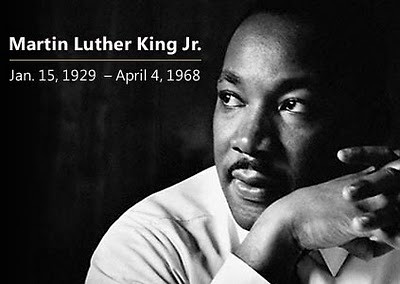
The legacy of Dr. Martin Luther King, Jr. was on the minds of students and staff alike in the Upper School as we began this week.

Students in the Middle School spent time reflecting on the accomplishments of Martin Luther King and the reasons we set aside this day to honor him.  After completing a short assignment researching who he was and what his goals were, students were able to have a meaningful discussion, guided by Middle School Social Studies teacher Jaime Pitschi, focusing on the idea of tolerance, about the impact Dr. King has had on the United States and on their own lives.  Taking this knowledge, students traced their own footprints in an effort to show how they can, as Rabbi Abraham Joshua Heschel is often quoted, “pray with their feet.”  On their left foot, they were to write and/or draw one way Dr. King’s message of tolerance has affected their lives today, while on the right foot they were to write and/or draw one thing they would do to continue Dr. King’s message of tolerance.  The 6th, 7th and 8th grade students were very thoughtful in their approach to the assignment and created beautiful footprints that reflect their interpretation of Dr. King’s message.

Through the work of Rabbi Iscah Waldman and Social Studies Department Coordinator Randy Trupin, high school students explored the famous “I Have a Dream” speech of Dr. Martin Luther King, Jr. First students viewed a video of the speech, then with the help of faculty members and seniors in Rabbi Waldman’s Rabbinics class, students explored the text of the speech, making connections to important Jewish texts through a school-wide beit midrash (literally house of study) in the gym. This was an incredible learning experience for students combing Jewish and general studies through the lens of a classic Jewish learning technique, the beit midrash.

Students in both divisions left the day with a stronger sense of why we choose to honor  Dr. King each January and, hopefully, with some thoughts on how we can honor and build upon his life’s work throughout the year.

Friday, January 18, 2013

Friday Letter - January 18, 2013

Wednesday around lunchtime, students and some faculty were a bit perplexed by the noises emanating from the lobby of the Upper School. At times, it seemed melodic and would resonate down the hall in a pleasing manner. What could the noise possibly be? Cautiously, the students and staff peered around the corner or stepped out of their offices to see what was going on.

Huddled around a electronic keyboard with Joan Freeman Cohen at the keys, were four members of our staff, Barbara Mann, Becky Friedman-Charry, Mike Bourdet, and myself. Furiously studying sheet music for several songs, this small group was launching the first Schechter School of Long Island Guerilla Choir.

What is a Guerrilla Choir? Think of it as a musical flash mob - several people gathering together for the expressed purpose of singing a little bit. No prior rehearsals, just some sight singing with a little piano help to make sure that we stayed in the same key.

Of course, being a group of singing educators, we did have an ulterior motive which was to pique the interest of Schechter students and staff in exploring organized vocal music. In other words, you can sing in places other than the shower. Already students have been approaching us and asking, “What was that for?”

The Guerilla Choir will strike again in a few weeks during lunch on Feb. 4. If you are in the building, join us and hum along for a few bars.

Shabbat Shalom!

Tuesday, January 15, 2013

(Green) Sustainability for Jewish Day Schools

Solar PanelsI haven't been keeping a formal count, but I think that over the last several months, I have read at least a hundred blog posts or articles about day school sustainability. Please don't construe this as a critique. I'm pleased that figuring out how to make Jewish day school accessible, affordable, and on-going is part of the larger Jewish dialog in North America. It's just that I've noticed that something is missing.

Conversations around day school sustainability have focused on increasing endowments, finding synergies in back room expenses, increasing the donor pool, making data driven decisions, and pursuing online and blended learning options. This multi-faceted pronged approach does have the strong possibility of making sure that Jewish day schools continue to exist and grow past this current crisis.

The missing link became apparent when I drove by Teaneck High School the other day and saw rows and rows of solar panel canopies covering the parking lot and entrance to the school. What's fascinating about the arrangement is that it appears that the Teaneck school district did not spend any money on the installation. Instead, they have reduced their cost of purchasing energy by 6 cents per kilowatt hour from the company that owns and operates the solar panels.

It's a fascinating arrangement and one that I'm wondering the Jewish day school movement should pursue. A small measure of energy independence (coupled with other energy saving efforts - insulation, climate control, etc.) would fit within our larger Jewish values while yielding financial savings in the pursuit of a sustainable model.

Monday, January 14, 2013

Friday Letter - January 11, 2013

It has been more than a week since we returned from winter vacation and, because so much goes on at the Upper School,  it seems like the distant past. Opportunities continue to abound here at the Schechter School of Long Island for students to engage their curiosity and to grow as individuals as we plan and participate in upcoming special events and programs.

With the American elections behind us, the school turned its focus to the upcoming Israeli elections. Discussions began in Hebrew classes as students began to learn about the Israeli elections. Given the complexities and differences from American politics, it was clear that students needed an in-depth briefing to help them negotiate the Israeli political landscape. Which parties advocated for which issues? What does it mean to be on the right or the left in Israel? And how exactly is the government formed when there is no direct election of the prime minister?

Enter Kenneth Bob, chair of the American Zionist Movement, president of Ameinu, and SSLI alumni parent. In his talk with students, Mr. Bob sketched out the roots of Israeli politics and connected formative Israeli leaders such as Menachem Begin and David Ben-Gurion to their political affiliations, helping the students contextualize their understanding of Israeli history with its politics. He then moved on to outline the current political landscape, describing the parties standing for election to the Knesset. Students left with a clearer understanding of the complexities of Israeli politics and basis for understanding the Israeli election news that we will read over the next several weeks.

On separate front, auditions and casting are complete for the high school’s spring musical, The Drowsy Chaperone. Thank you to the faculty who assisted Joan Freedman Cohen in the audition process. Excitement is already building for this new production and we look forward to the cast taking the stage for the 10th anniversary performance of the Schechter spring musical at the Long Island Children’s Museum on March 7, 9 and 10

It has been a great start to the new year.

Shabbat Shalom!

Friday, December 21, 2012

Friday Letter - December 21, 2012

I like a good argument. There’s something about engaging in a passionate conversation about a topic that gets the adrenaline flowing. Now, I’m not suggesting that we run around picking fights with each other. A healthy argument includes respect for one’s opponent and a conversation that stays focused on the issues rather than on the ad hominem attacks that we see among some talking heads on TV. This kind of debate is a great tool in and out of the classroom as it allows students to see an issue from multiple perspectives and forces them to back up an opinion with reasoning and facts.

This week in the AP Government class, there were timely debates regarding the role of interest groups in our political system. Specifically, the role of the NRA was part of the debate.  Several AP Government students made solid contributions on this subject.


On Tuesday, Robin Stanton's English 10 Honors class participated in two debates.  Students spent the previous two weeks working in teams: researching and synthesizing source material, planning strategy, and polishing their presentations.  On the morning of the debate, students arrived in professional attire.  They presented their arguments with a poise and authority that belied their years. Debate results were released later that day on PawPrint Now.


The members of the Debate Club are learning how to present persuasive arguments in support of or in opposition to current controversial topics that have been in the news frequently. It has also been discussed that you do not have to personally agree with the side of an issue that you are presenting. An effective debater should know both sides of an issue. Some of the topics that have been or will be the focus of our debates are listed below.


  1. Which presidential candidate should be the next president of the United States?
  2. Are social network sites such as Facebook, Twitter, MySpace, or LinkedIn good for our society?
  3. Do video games contribute to youth violence?
  4. Do the movies produced in Hollywood have a bad influence on society?
  5. Should athletes be allowed to use enhancement drugs?
  6. Should medical marijuana be available in all states?

During each meeting of the club, two teams are selected to take different sides of an issue. Each team presents their arguments. Each team has an opportunity to a rebuttal of the opposing teams statements. Then each team gives a very quick summary of their  arguments. The team that gives the best presentation is declared the winner by the club adviser, Mr. Steger.


The high school student government has also been involved in a debate of substance, among themselves and with the faculty. In response to some planned changes to 10th and 11th grade minyanim, student leaders wrote a letter to administration expressing their concerns. Several meetings have been held to discuss both student and faculty concerns and a partnership is developing out of these passionate arguments about how to engage our students in tefillah. As they develop, I look forward to sharing with you our plans.


There is no argument that it is time for winter vacation. On behalf of the faculty and staff of the Upper School, I wish you an enjoyable and safe winter vacation.


Shabbat Shalom!

Tuesday, December 18, 2012

I Am Not Planning a Polar Expedition

I just watched a Ted Talk by Ben Saunders which concluded with his plans for an upcoming Antarctic expedition on foot. He detailed his experiences doing things that most of us probably wouldn't even dream about.

Watching this talk was inspiring. Now let's be clear about one thing. I am not planning a polar expedition. While I do prefer cold weather to warm weather, my idea of a challenge does not include dragging a sledge filled with supplies across Antarctica for four months. I can think of a large number of things that I would rather do with my spare time.

But, Saunders is not encouraging everyone to run out and join a polar expedition. What he is encouraging is for us to get out and experience life. Getting out of the house, to borrow Saunder's phrase, means stepping outside of your comfort zone.

I wrote about this in an earlier post when I was challenging myself to stretch my linguistics skills. Taking risks needs to be a part of education and equally applies to students and faculty. As an administrator, I've challenged myself to learn about design thinking and will be taking part in the Day School Collaboration Network that the Jewish Education Project is supporting along with UpStart Bay Area.

Normally, schools make changes gradually. We run a program, evaluate, and make the changes for the following year. Design thinking, however, challenges us to consider rapid prototyping - making quick sample products that you test out and then go back to the drawing board as you test out the ideas.

This approach runs contrary to what I'm used to doing and moves me out of my comfort zone. I'm looking forward to seeing how design thinking gets me out of the house in the upcoming months. I'll be sharing my experiences through this blog.

An Unexpected Linguistic Adventure


In getting ready for my trip to London to attend World ORT's Wingate Seminar on instructional technology, I thought about a number of things to make sure that I was prepared for the trip. I checked the weather to ensure that I had packed the right kind of clothing. I put the finishing touches on my presentation to the group on how our school uses Google Apps for Education as an instructional and administrative tool. I spoke with friends and colleagues who had traveled to London about things I should try to do or see. At no point, did I think about brushing up on my Hebrew. After all, I was traveling to an English-speaking country.

When I arrived at the World ORT house, I received my linguistic surprise. While the sessions were conducted in English, the vast majority of casual conversations were conducted in Hebrew as the bulk of the participants were from schools in Israel. For the last several years, World ORT has been collaborating with the Israeli Ministry of Education on a program called Kadima Mada which enhances science education in schools in Israel's periphery. Along with representatives of schools in South America, the Former Soviet Union, and South Africa, the Israelis were taking part in the seminar to grow their skills in instructional technology and collaborate with colleagues from ORT supported programs throughout the world.

Sitting at lunch or during a coffee break, I could hear the sounds of Hebrew around me and if I closed my eyes, I was suddenly somewhere in Jerusalem or Tel Aviv, not at a conference in the heart of London. It was in these moments that I chose to pick up the gauntlet of linguistic risk and begin to speak in Hebrew with my Israeli colleagues.

Linguistic risk involves taking your existing functional knowledge of a language and trying to stretch it. When you do not have a specific word, you try to work around it by using the vocabulary that you do have. Most importantly, though, it means being willing to make mistakes and to grow to from the feedback that you receive in the conversation.

I am not a native or fluent Hebrew speaker by anyone's definition. Like most language learners, my vocabulary is limited to specific situations, such as ordering in a restaurant or asking people about how they are doing. I lack the ability to talk about a variety of topics, including many aspects of my own profession. Yet, because I was willing to engage in linguistic risk when speaking with my Israeli colleagues, my skills in having this kind of conversation have grown and my confidence has increased exponentially.

All learning involves some form of risk. After all, you are attempting something new that you have never done before (otherwise it would not be learning). As teachers, it is our job to create an environment where students are willing to engage in risks. This means showing your support through appropriate encouragement and make sure that the risk falls within an acceptable range. The steps between learning concepts and skills need be just far enough apart that students stretch, but not so much that they fall on their faces.

I would not have taken my own linguistic risk if my Israeli colleagues had not encouraged me to speak and supported me as I stumbled my way through a conversation. After five days of continually taking this linguistic risk, I have grown as a Hebrew speaker. I am more comfortable struggling with the language and I have learned new words and phrases.

Imagine if we could constantly create this safe environment for our students to continually take risks in our classrooms, rather than just playing it safe. The opportunity for student growth could be amazing.

Thursday, December 13, 2012

Friday Letter - December 14, 2012

For the last several weeks, it has been dark when I have left for school in the morning and dark again when I have arrived at home. With the winter solstice approaching, we will soon see increasing daylight hours, but until then, I find myself craving the light. Perhaps it is fitting then that the Festival of Lights arrives in the midst of this darkness imposed by the Earth’s axis and its rotation around the sun.

Fortunately, there has been plenty of (high)lights to go around this week. Saturday night brought with it the first night of Hanukkah and the closing performance of Shlemiel the First. This group of talented high school actors shown on the stage as they made the audience laugh until we cried with the antics of the residents of Chelm. The “wisdom” of the Chelmites defied logic and the performance amazed and delighted. Kol HaKavod to Joan Freedman Cohen and the cast and crew!

The days brightened some more with our Hanukkah Haggigah (holiday celebration). Middle school and high school students thoroughly enjoyed the rhymes, rhythms, and music of Bible Raps performer Matt Barr. Students (and Rabbi Bernstein and Rabbi Josh) joined in on stage for portions of the performance as they used this medium to explore the holiday and their connection to Judaism.

Glow sticks, strobe lights, and candle light pierced the darkness during the middle school dance. In addition to our own students, we were joined by students from Solomon Schechter Day School of Queens and East Midwood Hebrew Day School. This was a wonderful opportunity to bring students together from the schools within the Schechter Network. We closed the night with a communal candle lighting and the singing of Maoz Tzur.

There is a Talmudic argument between the houses of Hillel and Shammai over how candles should be lit during Hanukkah. Shammai’s disciples promoted starting with all eight candles lit and reducing the number of candles each day while Hillel’s students thought that we should should increase the candles until all eight were burning the last night. While everyone knows which school of thought we follow on this issue, it is clear to me that, at least this Hanukkah, we have seen the light increase as we have moved through the holiday.

Shabbat Shalom v’Chag Urim Same’ach!

Tuesday, December 4, 2012

Fire, Fire!

Fire drills are one of those necessary evils of school administration. In the jurisdictions that I've worked, they have been legally required and it can be a struggle to squeeze the appropriate number in each school year.

It's not that I'm opposed to having the drills or the opportunity for a little fresh air that goes along with them. They are important. In a school, you have to have a measure of fluency with your emergency preparedness plans. With so many moving parts (read this as students, parents, and faculty), the potential for the unscheduled to occur is more probable than we want to think. It's the scheduling of the drills that drives me nuts.

I've been responsible for coordinating fire drills over the last five years in the two schools that I've been an administrator. Here's a short list of the factors that I've had to contend with when wanting to put a fire drill on the schedule.

  • Transitions between periods
  • Lunch time
  • Dismissal
  • Arrival
  • Nap time
  • Tests
  • The day of the week or period of the last drill
  • Admissions testing
  • Donor meetings
  • When in the period the drills scheduled for
  • PE classes
  • Special programs

Plus, of course, the weather. Is it any wonder why scheduling fire drills can drive me crazy?

Yet, somehow, I do get them scheduled. And having once worked in a school where there was a fire, they are important. Looking ahead to getting the rest of this year's fire drills scheduled, I'm thinking about how to do they smarter.

One thought continually comes to mind after a drill. We constantly evacuate the building using all available exits. But, if we can get through all of the hallways to all of their stairwells, where is the fire? This may be a bit sadistic, but I'm thinking for my next fire drill to have a staff member where a big red and yellow sign that says, "Hi, I'm the fire." and block off that exit. I wonder what the reaction will be.

Are there more ways to make fire drills more effective training tools? And how do we overcome the reluctance of some staff to accept this necessary interruption to the school day? How do you convey to students the seriousness of the drill? How do you improve performance from drill to drill?

Friday, November 30, 2012

Friday Letter - November 30, 2012

One of my first introductions to life at the Upper School was a phenomenon known as being “Paw Printed.” Thinking back, I’m not sure if I had even stepped foot on the campus as the incoming Upper School Principal when I received an e-mail from a student-reporter asking to interview me for the high school newspaper, Paw Print. We e-mailed back and forth a few times and made arrangements to speak at my next visit. She asked me a variety of questions about my reasons for coming to the Schechter School of Long Island, my background, and my thoughts on education. In other words, I was “Paw Printed.”

Since then, I’ve been “Paw Printed” several more times, and I am sure that there will be more.
In the past week, I’ve been approached by student-reporters from each of the school’s news publications, Paw Print, Paw Print Now, and News from the Middle, the middle school paper.  Our student reporters are diligent, inquisitive, and respectful when they are out “on the beat.” And, as I learned from my first experience with Paw Print, persistent.

Student journalism is an incredible learning experience for our students. With the support of Paw Print and Paw Print Now advisor, high school English teacher Shawn Thorgersen, and News from the Middle advisor, middle school English teacher, Kayla Motroni, students have been organizing coverage of school events and thinking about issues of concern to students with the goal of creating a quality publication that engages its readers. Students, particularly our reporters for the Paw Print Now daily news blog, are learning about deadlines and figuring out what is actually newsworthy. And, of course, they are learning about writing as a journalist.

So, the next time that you are in the building for a program, don’t be surprised to be approached by a student with some probing questions about life at Schechter. After all, you could be the next person to be “Paw Printed.”

Shabbat Shalom!

Wednesday, November 21, 2012

Friday Letter - November 21, 2012

Each year that I have taken groups to Israel, we encourage the students to experience the trip through all of their chumshim (senses): sight, taste, touch, smell, and hearing. As we walk the land, we want them to experience the trip at this basic level and then begin to process the more complex thoughts and emotions churned up by a trip to Israel.

This week, I’ve been thinking a lot about using my senses as I’ve walked the halls of the Upper School. Close your eyes for just a moment and concentrate with me as I walk you through my sensory experience at school.

Touch - The feel of a diligently built bridge being taken apart in Sci-Tech to figure out why it failed. It is just as important to understand why something did not work as it is to get it working as these students learn the principles of engineering.

Taste - We shared cookies, donuts, and juice with our neighbors at St. Aidan’s at our second annual Thanksgiving celebration. We gathered the middle schools of both institutions together for an opportunity to reflect and appreciate all that we are thankful for this holiday. Students heard Father Kevin and Rabbi Josh talk about the things that they have taken for granted and now realize how important they are. Mrs. Joan Friedman Cohen organized a group of 6th and 7th graders on drums and recorders to teach the students a song and the St. Aidan’s choir performed.

Sight - The image of a coalition of Muslim and Jewish schools, synagogues and mosques
gathering together  at Hempstead Town Hall to present Hempstead Town Supervisor Kate Murray with blankets, warm coats and non-perishable food items that they have collected to donate to Hurricane Sandy victims. These items will be distributed by the Town of Hempstead to families in hard-hit communities throughout the Town, whose lives have been devastated by Hurricane Sandy, and many of whom are still unable to return to their homes.       

Hearing - Take an audio tour of many of the classes and other experiences that the Upper School students have had through Sounds of Schechter.

Of course, I have not left off the important sense of smell. Naturally, this week brings with it the smell of turkey roasting in the oven and all of the delicious smells of Thanksgiving. In these post-Sandy days, we have heightened our sense of gratitude towards our blessings. Take a look at what the 10th grade minyan thought about gratitude through the bracha מודים אנחנו לך in the עמידה. Here is a visual representation of their responses.

I wish you and your families a Happy Thanksgiving.

Shabbat Shalom!